MANUAL
Change every jar by hand.
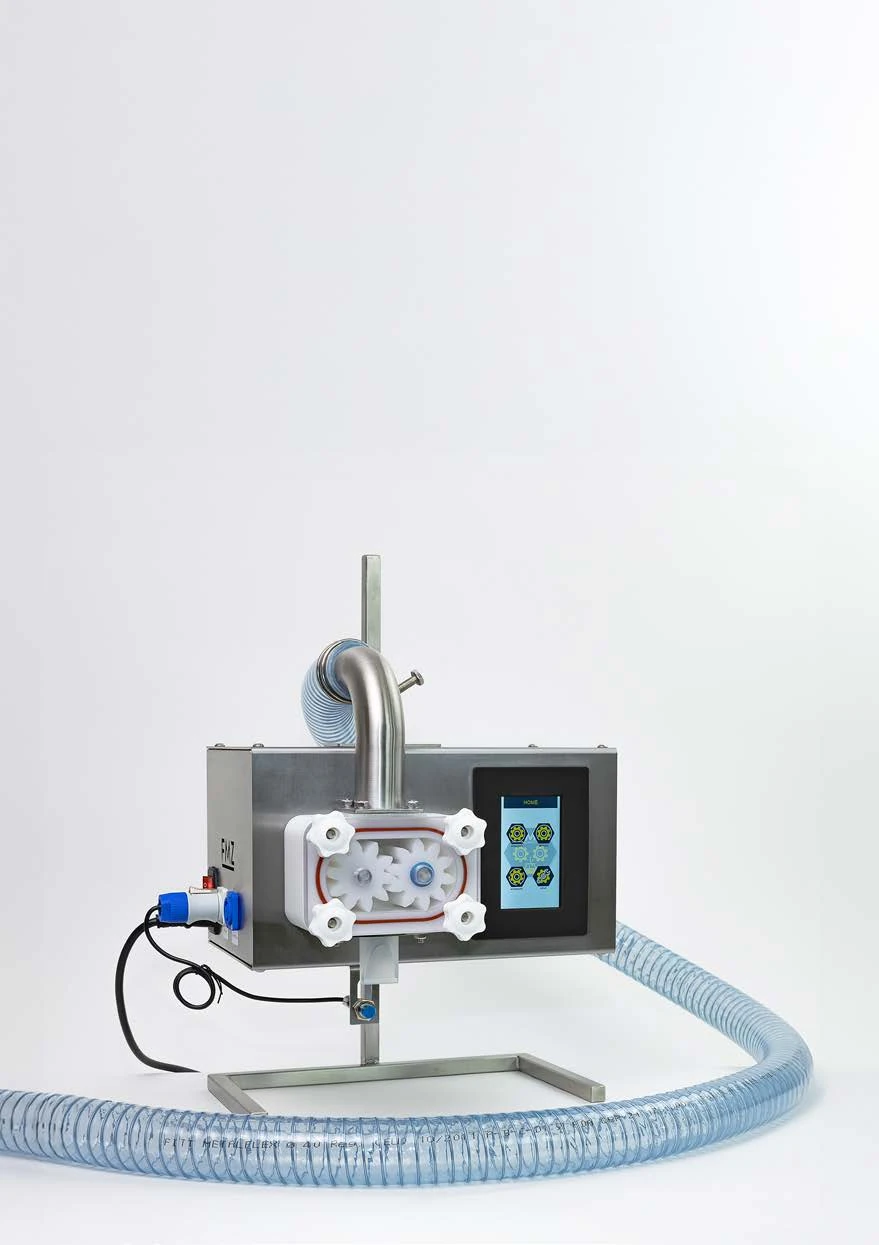
- Pick up jarManual step
- PositionManual step
- FillMachine
- RemoveManual step
↻ These manual steps repeat for every jar.
The operator positions and removes each jar directly at the filling point.
FMZ automation
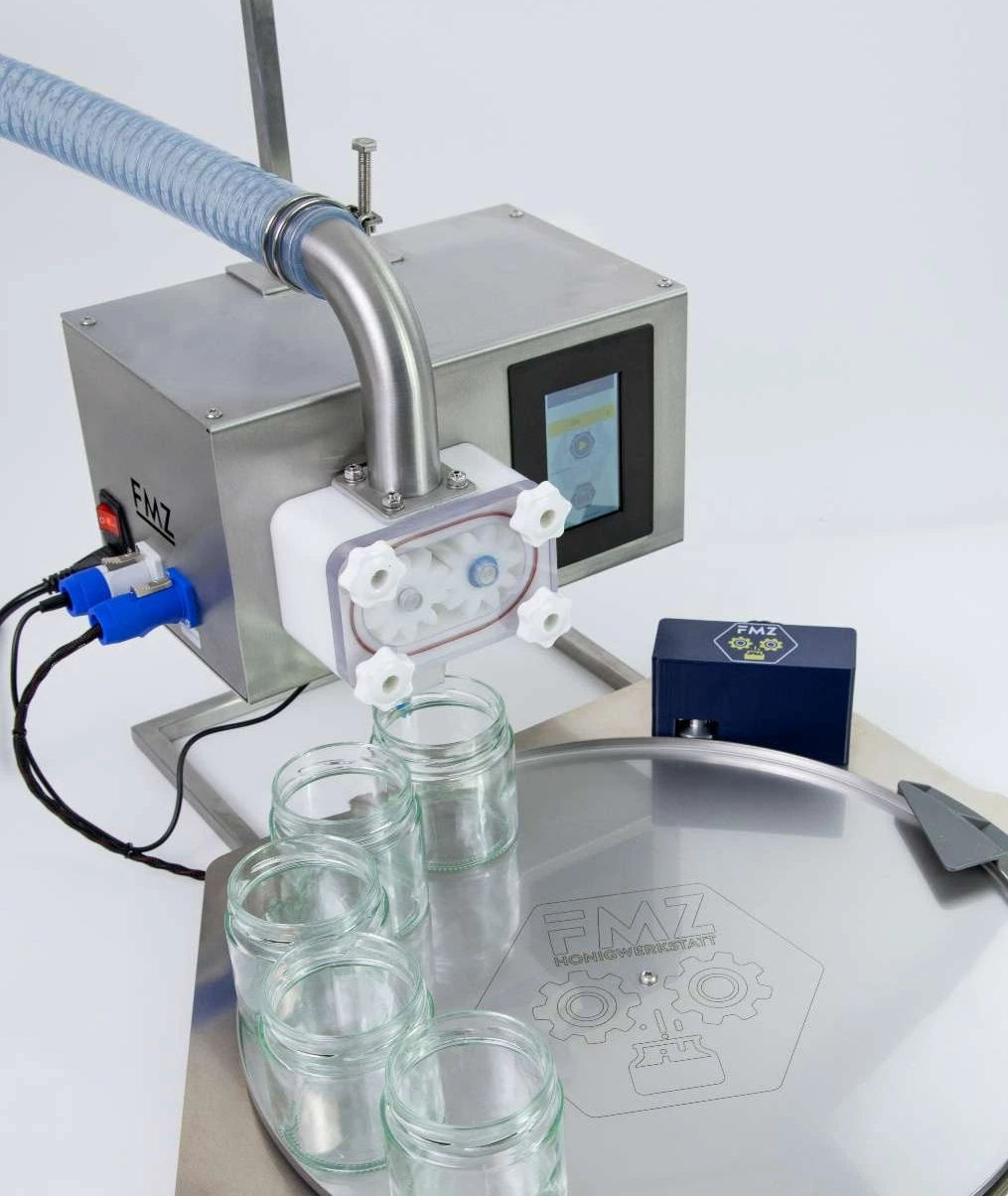
With DT45 or DT80, the FMZ filling machine controls both dosing and jar feeding at the filling point.
Rethink your filling station
Both rotary tables transport jars to the filling point and are controlled by the FMZ filling machine. The difference lies in setup and jar guidance: on the DT45, you align empty jars manually at the rim. On the DT80, a jar guide moves them outwards. With both models, you load jars and remove the filled jars yourself.
The everyday difference
↻ These manual steps repeat for every jar.
The operator positions and removes each jar directly at the filling point.
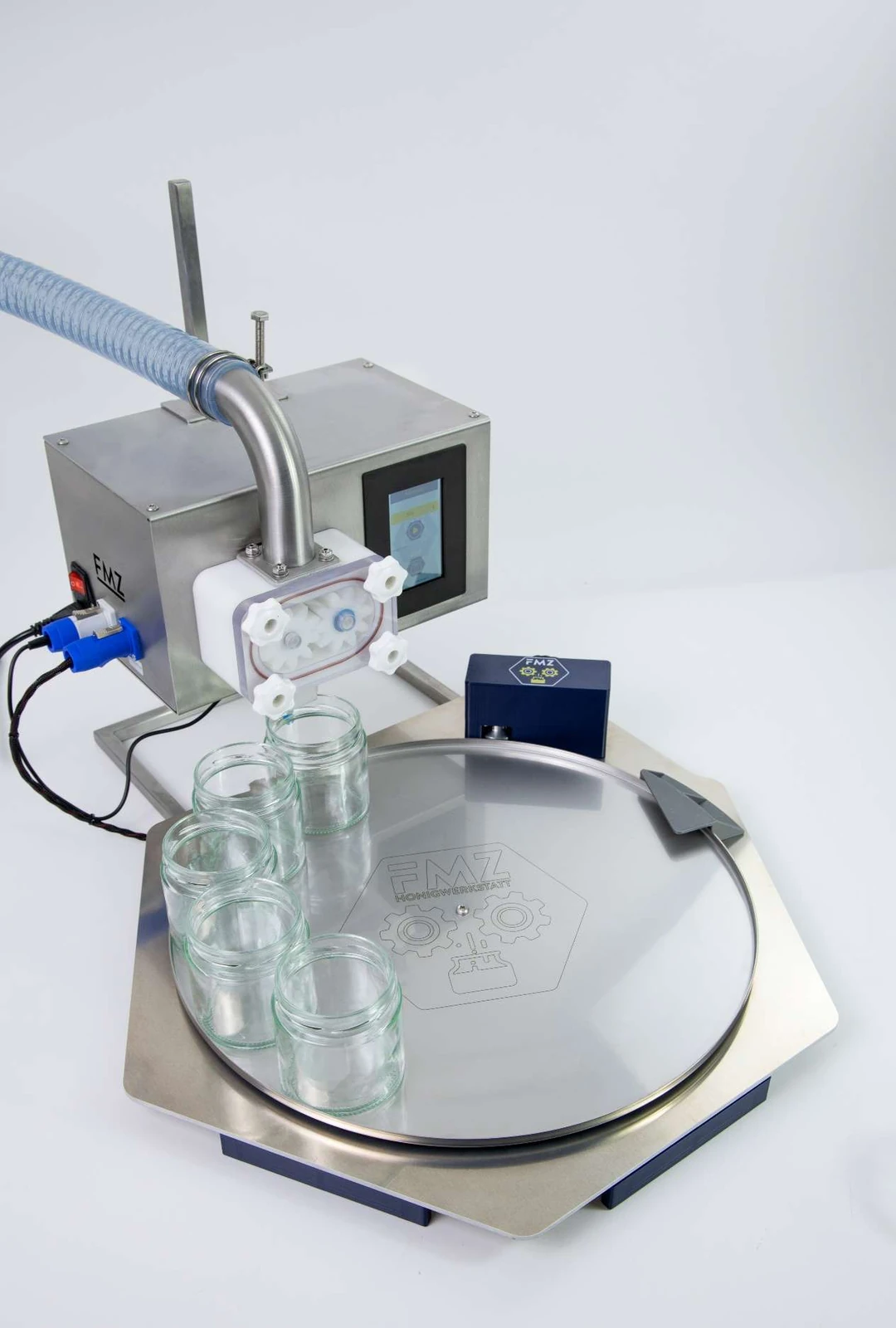
↻ The rotary table brings the next empty jar to the filling point.
The operator loads jars, removes filled jars, maintains the product supply and supervises operation.
Process diagram: the symbols explain the operating steps. Further steps take place at separate stations.
How the system works
The rotary table brings the next empty jar to the filling position.
The sensor detects the jar. The rotary table stops.
The filling machine dispenses the preset quantity.
The table moves on. The deflector mechanically guides the filled jar out of the sensor's path.
↻ Back to step 01: the next empty jar.
The operator loads jars, removes filled jars, maintains the product supply and supervises operation.
One system, one control interface
Keep the same filling machine. Connect DT45 or DT80 and automate jar changes – without a separate process controller for the rotary table.
Jar feeding, stopping and dosing are coordinated.
Load jars, remove filled jars and keep an eye on the product supply.
Further steps take place at their own stations. The operator transfers products between stations.
Which rotary table is right for you?
Ø 450 mm, 8 kg and 50 W. Fits on a worktop 600 mm deep. The filling machine can be positioned from different directions.
Explore DT45Shown: DT45 with filling machine.
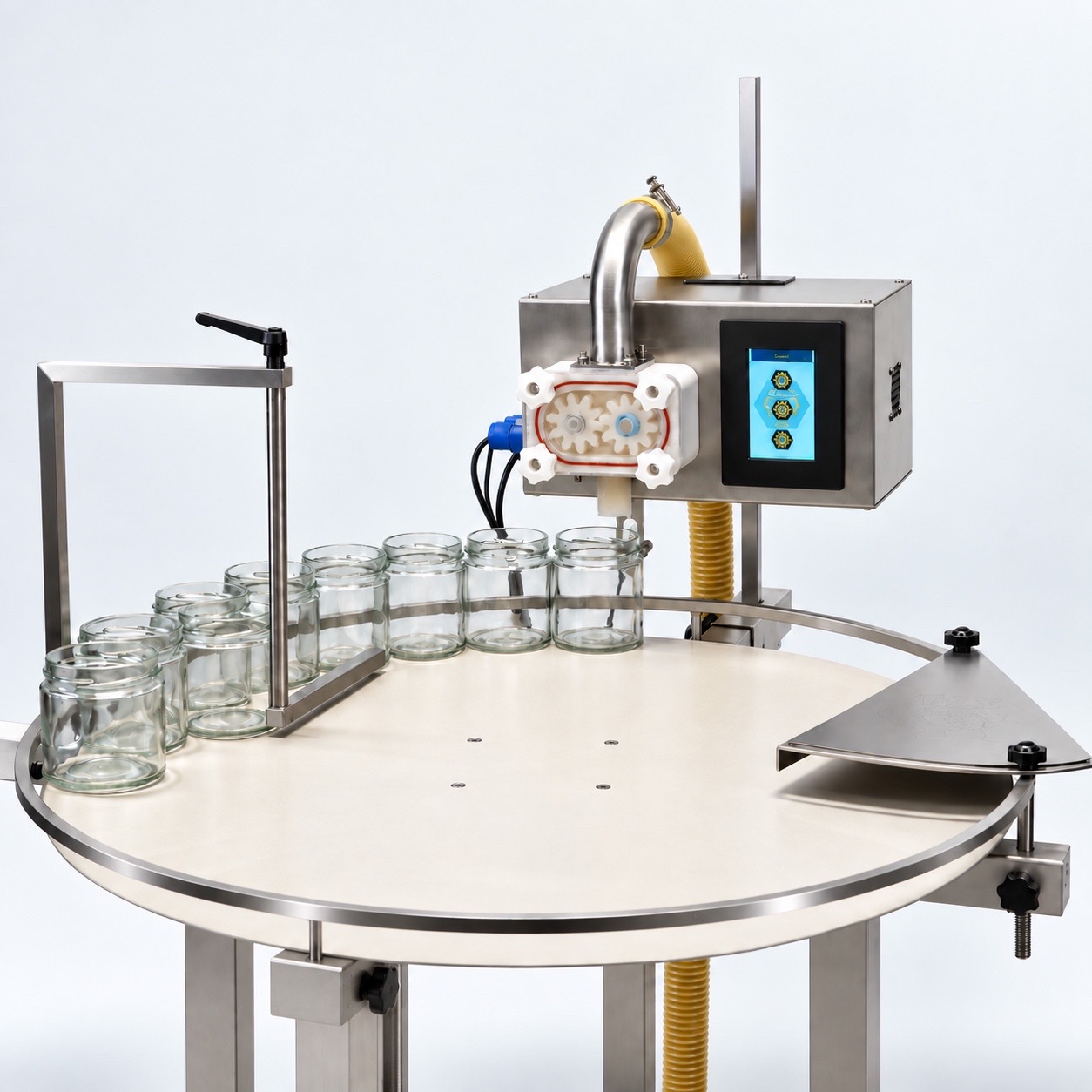
Ø 800 mm with stainless steel wheeled frame, a defined machine position and a height-adjustable, lockable mount.
Explore DT80Shown: DT80 with the separately available FMZ filling machine.
| Feature | FMZ DT45 | FMZ DT80 |
|---|---|---|
| Rotating plate | Ø 450 mm | Ø 800 mm |
| Setup | Existing worktop | Dedicated wheeled frame |
| Loading empty jars | Align by hand at the outer rim; no jar guide | Place on the table; the jar guide moves jars outwards to the filling lane |
| After filling | The jar deflector moves jars approx. 15–20 mm inwards | The jar deflector moves jars inwards for collection |
| Removal | By hand from the inward-offset lane | By hand from the inner collection area |
| Weight | 8 kg | approx. 45 kg, excluding filling machine |
| Performance | 50 W | 90 W |
| Material | Stainless steel rotating plate, aluminium base plate | Stainless steel construction |
| Machine position | Accessible from different directions | Defined, height-adjustable and lockable |
| Control | Via the FMZ filling machine | Via the FMZ filling machine |
On small screens, scroll the table sideways.
A rotary table can handle repeated transport to the filling position. Compare the entire process: how often do you need to load and remove jars, and how is the product supplied? Fewer movements at the filling point do not mean operation can run unsupervised.
Automatic jar feeding does not solve an interrupted product supply. First check consistency, temperature, hose routing and container position. Weight variation or air in the feed should also be resolved before expansion. Otherwise, you are simply adding a rotary table to an unreliable dosing process.
With small, changing batches, setup and cleaning can account for a large share of working time. Do not assess only the number of jars per hour during pumping. Record the times for your current workflow, then compare which step the accessory actually changes.
Our specialist dealers advise on machines, equipment and purchasing.