
Recipe and ingredients
Fruit pieces, seeds and other solids affect pumpability. Size, proportion and texture matter.
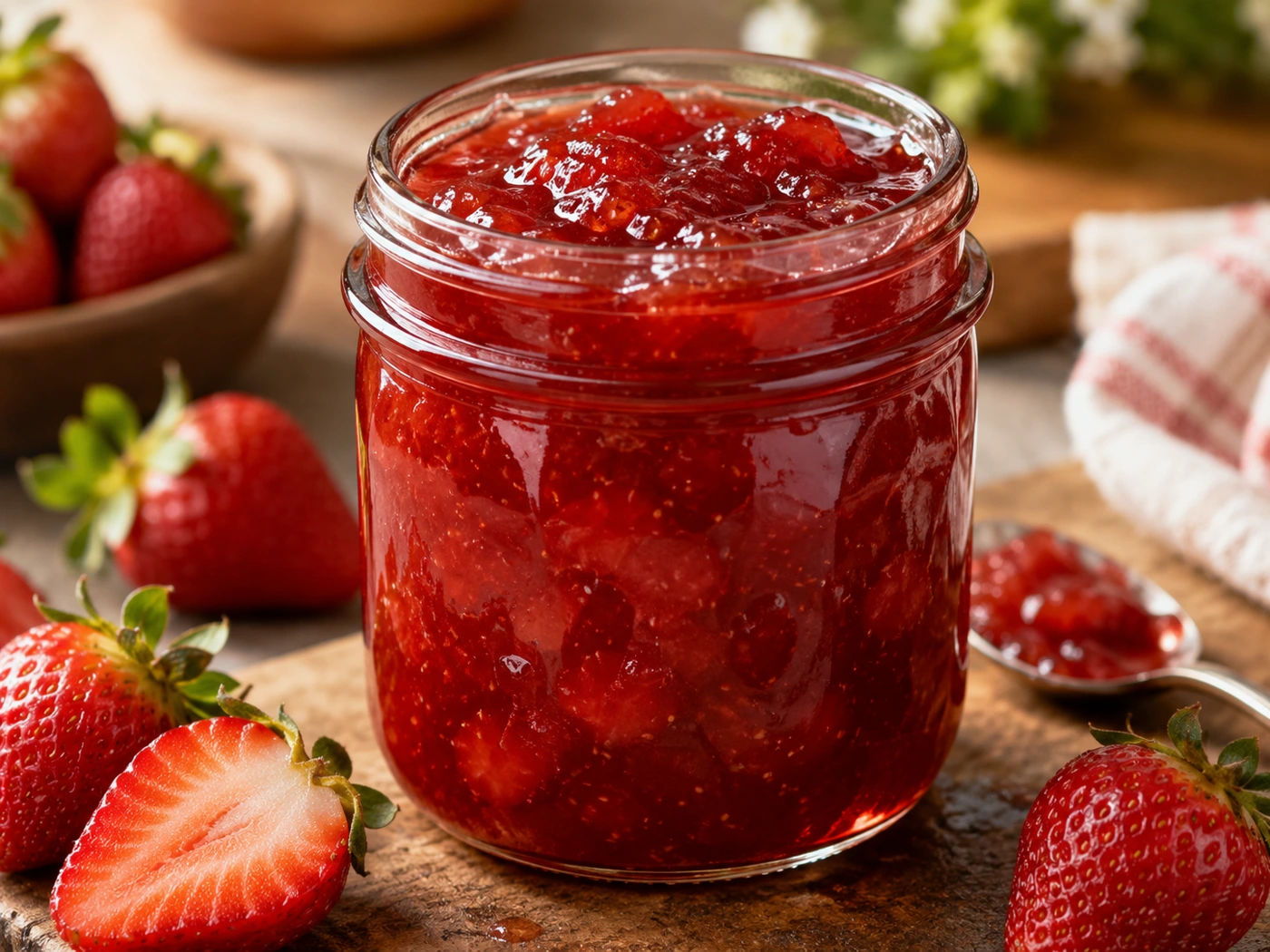
Jams, preserves & fruit spreads
Want to dose jam, preserves or fruit spread? First check whether recipe, pieces and filling temperature suit the available equipment. Here are the questions for a specific suitability assessment.
ILLUSTRATIVE IMAGE
For your fruit recipe
Fruit content, piece size and temperature shape the filling process. We therefore assess fruit spreads based on their specific recipe and production conditions. This helps clarify the product feed and equipment suitable for your application.
What matters for your product
Fruit pieces, seeds and other solids affect pumpability. Size, proportion and texture matter.
Actual temperature must be considered when specifying the setup. For hot filling, the hose, seals and valve must also be approved for the conditions.
A hopper for smaller batches or hose feed from a supply container: the setup depends on your process.
Matched to production
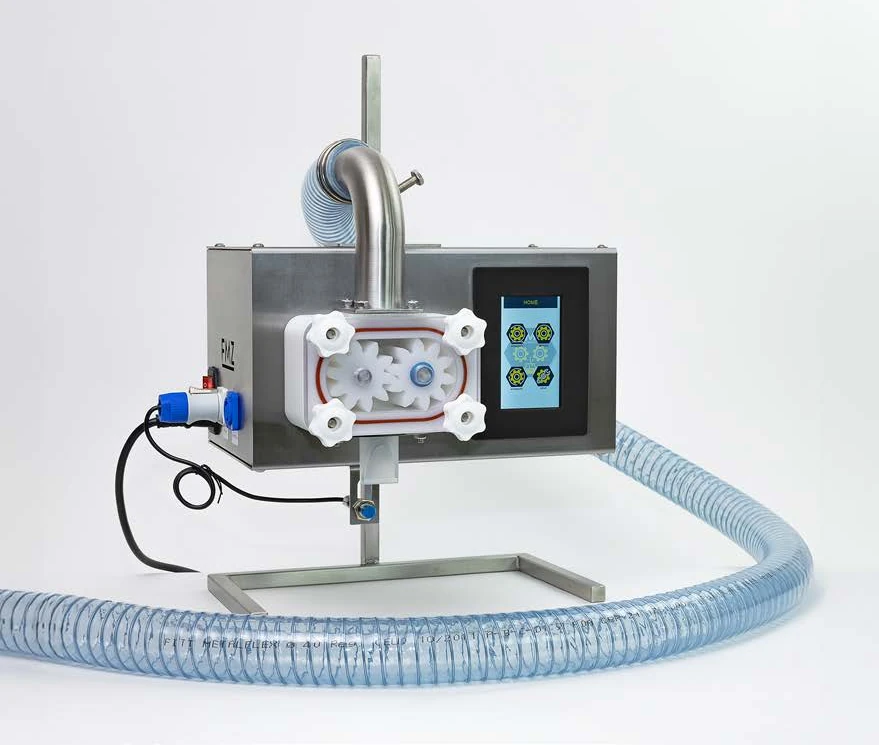
Dose suitable viscous foods. Set the fill quantity and calibrate using actual weight.
Explore the filling machine
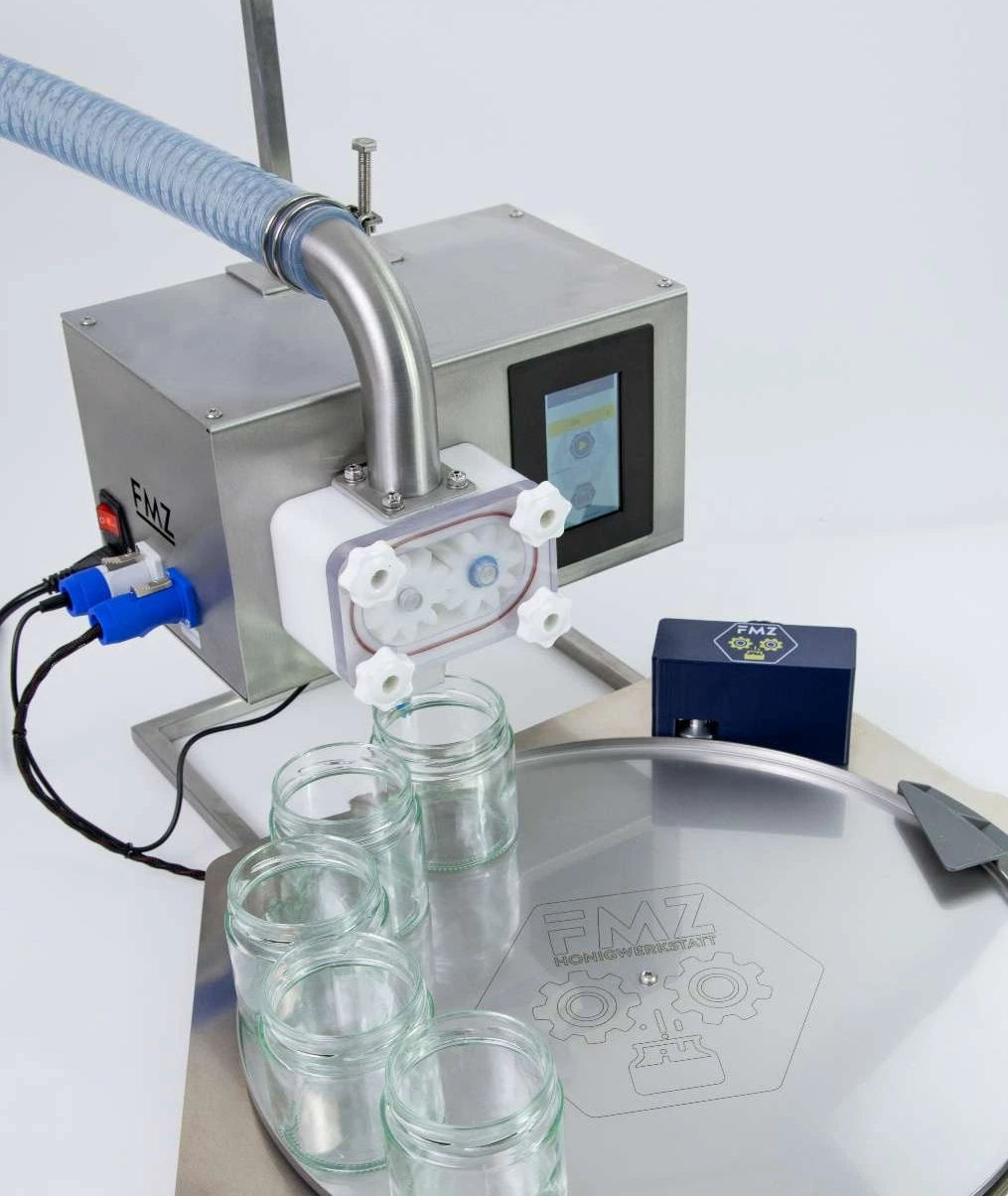
DT45 for the worktop or DT80 as a mobile unit. Controlled by the FMZ filling machine.
Compare DT45 and DT80Shown: DT45 with filling machine.
Describe whether the mixture is homogeneous or contains solids. For pieces, size, shape, firmness and proportion matter. Soft fruit pieces, skins and seeds place different demands on the equipment. The name “jam” alone therefore does not tell us whether the existing gear pump suits the specific recipe.
Assess consistency at the actual filling temperature and over the planned working time. Record whether the spread flows in the container or becomes noticeably firmer. For an informative trial, temperature, waiting time and product feed should match later production.
Record the temperature at the pump inlet and the temperature required at closing. The permitted temperatures of the machine, hose, seals and valve must match. Have the limits for the specific configuration confirmed.
Compare the original product with the filled jars. Assess piece size and distribution, and consistency. Adequate pumping performance alone does not mean the appearance remains acceptable for your recipe. We cannot specify a universally permitted piece diameter without checking the configuration and recipe.
Weigh several test fills as net weight. Also observe whether the product enters the jar opening cleanly and whether strings or residue form at the end. Test with the intended valve and jar. Calibration adjusts dosing; it replaces neither suitability assessment nor ongoing weight checks.
The process also includes replenishing, removal and downstream steps. A rotary table automates transport at the filling point, not automatically the entire production process. Plan removal so filled jars do not accumulate. Product-specific hygiene and temperature requirements remain part of your production workflow.
A recipe profile, photos of consistency and pieces, filling temperature, required net weight and batch size are helpful. Also state the supply container, jar dimensions and intended time until further processing. This helps clarify whether a trial with the existing machine is worthwhile.
Fruit spreads are an application requiring suitability assessment. A documented trial with your recipe is decisive: fill weight, product structure, temperature and the end of filling must meet your predefined requirements.
Your application
Tell us your recipe, fruit piece size, fill quantity and processing temperature. Together, we assess how your products and filling process can be handled with FMZ.