
Yoghurt in practical use
Practical experience also exists with suitable fruit ingredients. Piece size and proportion remain decisive.
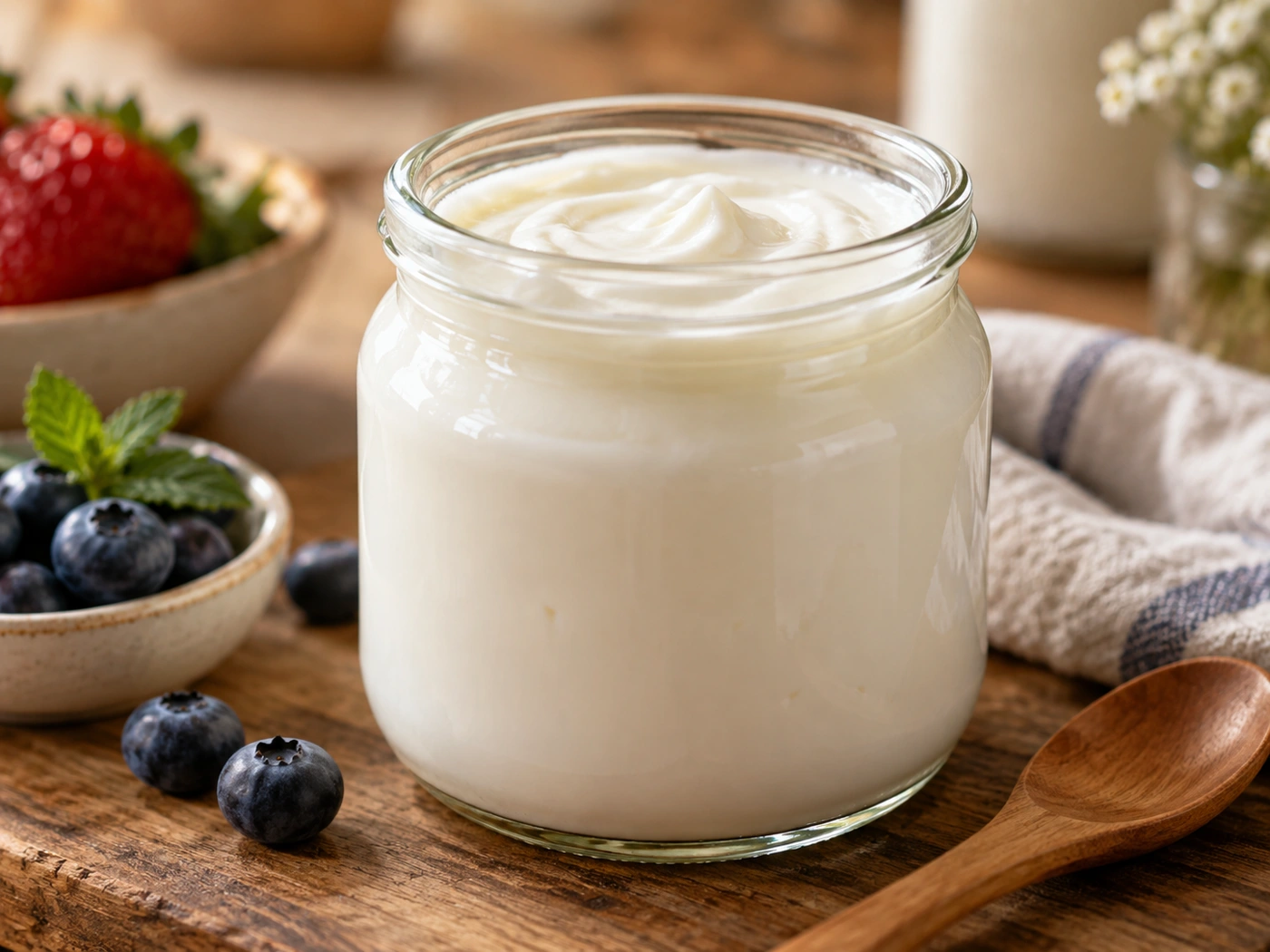
High-viscosity dairy products
Yoghurt with apple, raspberry and strawberry pieces is already filled with FMZ. For your recipe, an even product feed and retention of the desired structure after dosing are what matter.
ILLUSTRATIVE IMAGE
For your dairy process
Want to portion yoghurt without scooping each jar by hand? The machine handles dosing; you position the jar and check the fill weight. Experience with fruit yoghurt is available. A product trial helps us establish whether your piece sizes and recipe work similarly. This does not imply general suitability for quark or all dairy products.
What matters for your product
Practical experience also exists with suitable fruit ingredients. Piece size and proportion remain decisive.
For quark, we assess pumpability, product structure and feed based on your specific recipe and desired result.
Product temperature, hygienic handling and cleaning must suit the dairy process. The machine does not provide cooling or heat treatment.
Matched to production
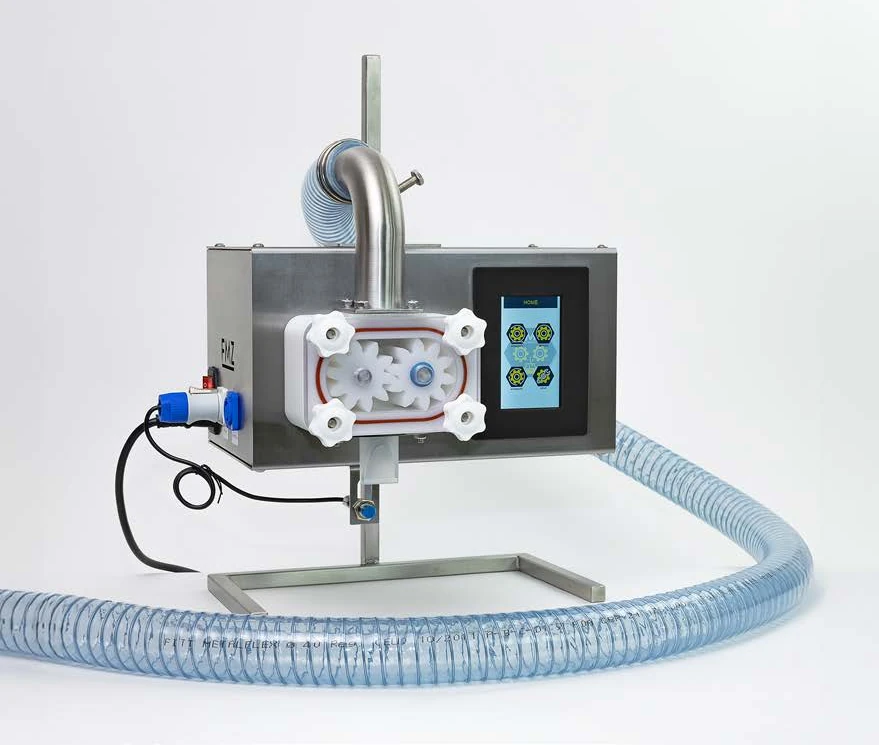
Dose suitable viscous foods. Set the fill quantity and calibrate using actual weight.
Explore the filling machine
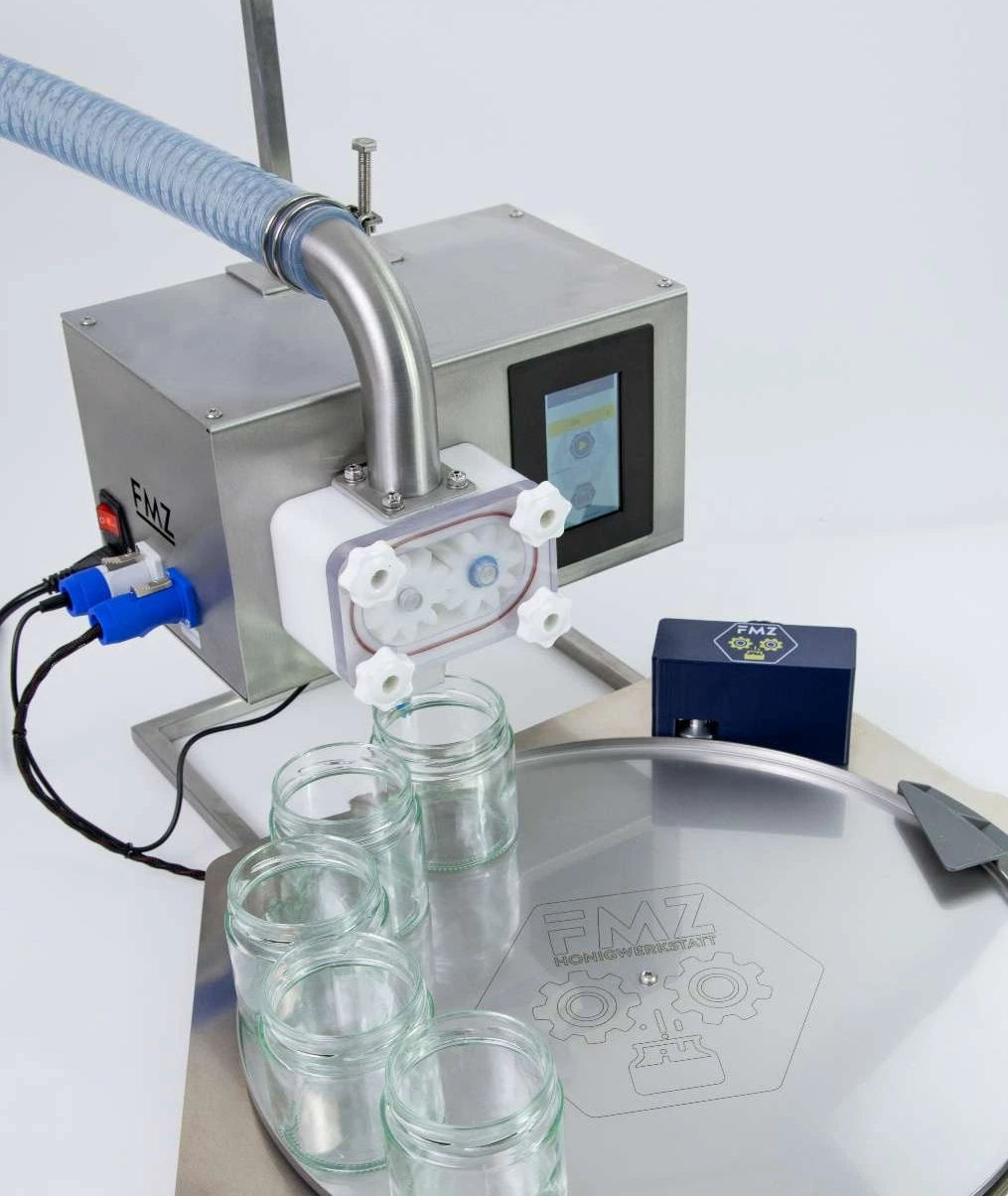
DT45 for the worktop or DT80 as a mobile unit. Controlled by the FMZ filling machine.
Compare DT45 and DT80Shown: DT45 with filling machine.
Alongside net weight, consistency, visible fruit content and appearance matter. Pumping can mechanically stress a product; with yoghurt, this can change flow behaviour. During a trial, compare product samples before and after pumping under the same temperature conditions.
Fruit type, largest piece dimensions and fruit proportion are important when comparing with fruit yoghurts already filled. Also describe whether soft pieces should remain visibly intact or the product is already homogeneous.
Describe the supply container, its position and the planned connection to the machine. A product that barely flows by itself requires a different assessment from a freely flowing yoghurt. Assess feed with the product in its actual condition. The filling machine does not replace an upstream mixing or preparation step.
Test at the intended filling temperature and with a realistic time between preparation and filling. Temperature control and hygienic handling must be ensured in your operational process. A successful dosing trial does not establish shelf life or microbiological safety of the filled product.
Calibrate using the net weight of a test fill, then check several fills. Visible air, altered consistency or uneven feed can affect the assessment. Record settings and conditions. The machine has no integrated checkweigher to reweigh every fill.
Identify all product-contact parts: feed, pump head, seals and valve. Check whether disassembly, cleaning, drying and reassembly fit your workflow. The cleaning conditions for individual parts must be followed. Match cleaning agents and methods to the materials and operating instructions.
State product type, temperature, fruit content or other pieces, fill weight and batch size. Add the intended supply container and the opening, height and diameter of the jar or container being filled. Describe your expected result, such as a specific texture or a defined distribution of fruit pieces.
Set the criteria in advance: verifiable fill weights, accepted product appearance, a suitable end to filling and a practical cleaning process. The operating conditions confirmed for your recipe must align with the documentation for the specific machine.
Your application
Tell us the product, processing temperature, desired consistency, ingredients and fill quantity. Particularly for very firm recipes, product feed is part of the technical assessment.